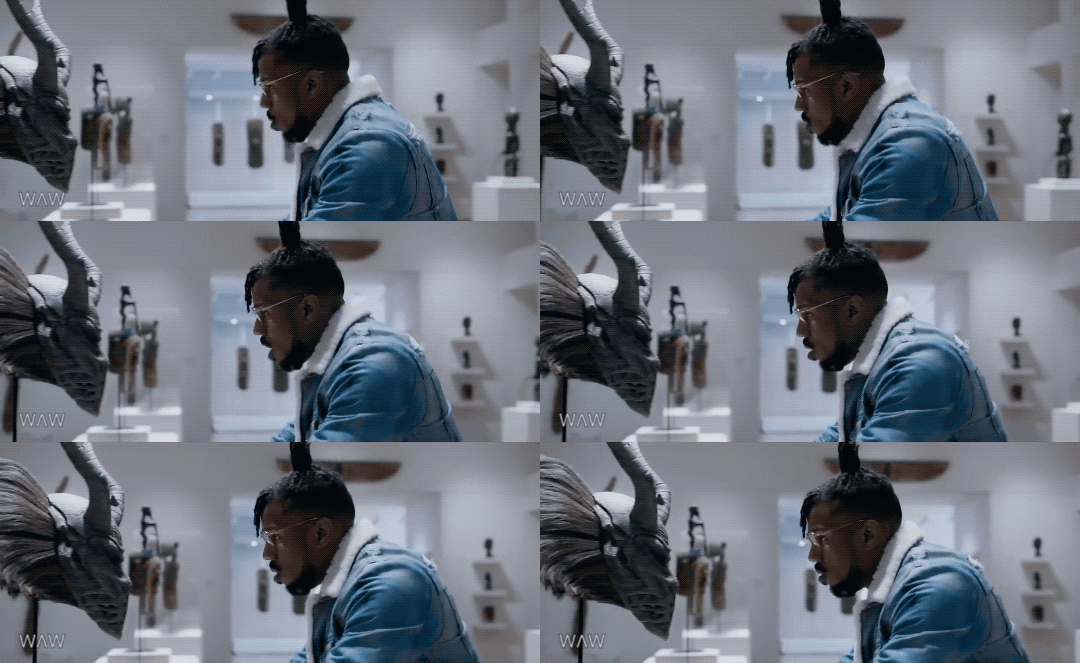
Killmonger: How do you think your ancestors got these? You think they paid a full price for it? Or did they take them like they took everything else?
I work in a museum- an old one- and during this scene I was nudging my brother the whole time. I clapped a little at that line. Museums need to rethink the way we curate things. If we aren’t elevating the heritage of those objects’ creators, if we aren’t telling their story, if we aren’t making those narratives accessible to the descendants and letting them lead, then what is even the point? Decolonize collections. Practice co-curation. Hire scholars of color, and make the collections accessible to visiting scholars. Involve the descendant community and elevate their voices, not the white colonial narrative.
And for goodness’ sakes, don’t run your museum like a jewellery shop. Have context. Honor the objects for their beauty, but remember that no object is as important as the people who created it.
Ummmm,, and like straight up, give things back? Indigenous communities in North America have campaigned for decades to have body parts, ceremonial items and sacred parts of our history returned to their communities.
Ofcourse, Hurd scholars of colour and think critically about your role. But like sometimes, you just have to give things back.
That’s repatriation (what I meant by “decolonize collections”) and it’s actually been federal law in America for almost thirty years. It’s been happening and will continue to happen, but it’s a LOT more complicated than just “give the stuff back.” Obviously you’re totally right- giving the stuff back is absolutely necessary.
But at the same time, giving ALL the old stuff back to Native groups doesn’t really work, either- for us OR for them. What happens to the stuff when it goes back? Do the modern Alaskan Athabascans really want the 1000+ baskets the museum I work at holds? (No, they don’t. We asked them. They definitely do not want those baskets back.) What about Native groups who don’t want remains back- the Navajo, for instance, believe that the remains of the dead are taboo objects, unclean and best left buried. And there are some Native groups who actually WANT their objects in museums. Not every object has a ritual context- sometimes a pot is just a pot. Even some ritual objects aren’t as spiritually important, and we’ve actually had people from different tribes come in and help rewrite language surrounding an object, or give instructions as to how it should be stored. Some groups really want us to display their cultural artifacts, because it reminds people that Native American cultures are alive and real.
One thing that works really well in a lot of cases is co-curation, which is when we commission and work with Native artists, leaders, and scholars to reframe the way we display objects. Like, recently, we asked Chris Pappan, who’s a Kanza artist, to come in and draw on the displays from the ‘30s. The juxtaposition of his art with the colonialist view of Native Americans has had a huge impact in visitor impressions- people go to that gallery now to learn and see what’s ACTUALLY happening today with Native Americans. This I think is how these institutions can use their power for good- elevating creator voices and letting them present their own past and own history. The Field does that a lot- we’ve had exhibitions from Rhonda Holy Bear, Bunky Echo-Hawk, and are continuing to work with Native Americans from many tribes to redesign and reframe the objects on display. We’re not doing this for social justice points- we’re doing this because the Field Museum gets something like 1.5+million visitors a year, and we owe it to the Native tribes we stole from to a.) tell their story b.) how they want it.
If you take all evidence of Native Americans out of the big natural history museums, you’re taking away representation- and education- and a lot of tribes actually don’t want that. What many groups want is the old colonial narratives to go away and be replaced with their own messaging and history. Native Americans are mythologized and what we did to them is sanitized in the US education system. I know that the person who responded is in Canada- and from what I hear, they’re even worse about destroying Native history and sanitizing what the colonists did (and continue to do) to them and their cultures. And this is where I think museums can actually HELP. People only care about things they’re familiar with. If the only image you have of a Native American is a racist football mascot, you’re not going to care about them as a culture- you’re not even going to see them as people. There’s a lot of white people who don’t believe in Native Americans. Like, they legit don’t think that there’s ANY Native groups left, and I know this because I’ve talked to these people at work. It’s baffling, how little Americans know about their own country’s behavior. And it’s totally a global problem- I could go on for days about what the British Museum Needs To Do With Those Fucking Marbles, Give Them Back You Cowards, You Have Enough Money To Ensure Their Care In Greece You’re Just Being Assholes- but I wanted to respond with a Native American context because of the person I’m replying to AND because… well, most Americans don’t know this, and they need to, because knowing about repatriation and why we do it is important.
Repatriation is so very vital, but it’s even more vital to listen to the Native American groups and ask them what they want to happen- as well as treat each tribe individually. We don’t hold onto Tlingit remains because the Navajo don’t want their remains back. Treating all tribes as identical is wrong- not as wrong as withholding their precious cultural traditions, relics, and remains- but if we’re even going to (as a museum industry) attempt to apologize for the atrocities we’ve sanctioned, the first thing we gotta do is ask people what they want.
And the next thing we gotta do is listen.
I’m starting to work in a Museum, and though my museum is about Natural Science something stuck le about all of this. The museum does not only exhibit but also safekeeps collections and in the introductory course we were given three keys to the basis of a museum: preservating, researching and exhibiting.
And one is worthless without the other. Our collections are meaningless if they aren’t available for investigation. It’s totally encouraged for scientists to come and use our collections. Granted, our collection mostly consists of dead animals, plants and fossils. And part of my own museum’s goal is orientated to reclaiming by mostly having our own collections as otherwise some of our best fossils are exhibited in museums in USA.
In our museum, all a scientists has to do is basically send an email to access the collection.
So what strikes me is that you point that one of the things to get better is “make the collections available to visiting scholars”. Is that not the case? Or is it specifically not available to scholars of color?
It REALLY varies from museum to museum! Some museums it’s really easy to get in- but others, it’s SO. MUCH. RED. TAPE. I had mine in mind when I was writing that, because collections access takes absolutely forever.
Anytime something is so precious that a culture wants it back but the museum wants it too, i bet you anything some artist would love the commission to duplicate it.
And sometimes that works out amazing.
The Field used to have this totem pole. There are many such poles in the museum, and others in museums around the world- but not all poles have the same significance- it depends on context. This pole, in particular, was a 26 foot tall pole that had been stolen from an “abandoned” Tlingit village- of course, the village wasn’t abandoned, and the people who lived there never consented to giving up their totem poles, and they rather wanted them back.
Anyways, the Field had one that was taken from the Cape Fox Tlingit back in 1899, and in 2001, we sent it home.
In 2002, the Cape Fox Tlingit gave the museum a log. A big one, a huge cedar log. They didn’t need to, but they did, and what the museum did with it was this:
A father-son team of Tlingit artisans- Nathan and Steven Jackson- were commissioned to design and create a new totem pole for the museum. They worked with the museum to create a totem pole that celebrated Tlingit traditions and the modern Tlingit people- a totem pole that combined ancient designs with modern ideas. It’s a gorgeous piece with an incredibly pertinent meaning- according to the Jacksons, the hybrid design illustrates the “refraction” or bending of traditional Tlingit culture that occurred during a turbulent history of cultural loss and recovery.
Which do you think tells you more about what it means to be Tlingit today?
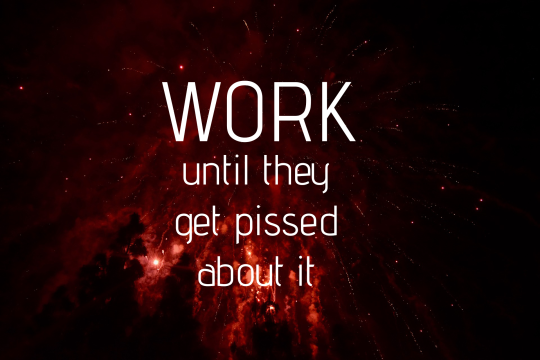
I have this planner with these absolutely ridiculous pages with like “motivational” quotes on them that are just these bullshit things like “Let your heart sing” and “Always believe in your dreams”
and like that’s always struck me as such meaningless bullshit, I’ve always hated those. They’ve never had that element that truly motivates me.
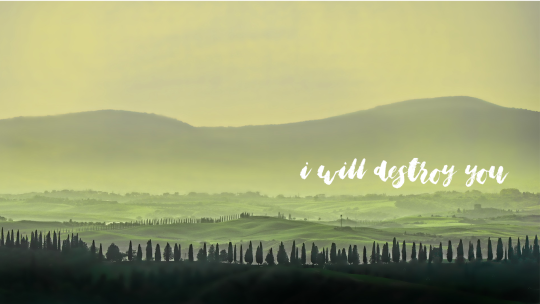
So, I took matters into my own hands and I made my own artsy motivational wallpapers. Enjoy.
As a person who will only do things that people tell me not to, these appeal to me greatly
pungent-petrichor: notyourexrotic: mslorelei: Clippy, the animated assistant in Word, is well known as one of the most hated software features ever released. Now we know why Microsoft released it – because the male engineers didn’t listen to female user feedback. “Even … Continue reading →
shevathegun: sodomymcscurvylegs: tachyon-at-rest: piratebay-premium: blood-and-pastry: in-adjective-carcosa: orasgiveaways: the-future-now: That’s Louis Rossman, a repair technician and YouTuber, who went viral recently for railing against Apple. Apple purposely charges a lot for repairs and you either have to pay up or buy … Continue reading →
Media sometimes uses a snarky butler as a sign of a weak or ineffectual employer, but man, if I had that kind of money, I’d pay extra for a butler who was quick-witted enough to just burn me to the ground at a moment’s notice.
upon learning Shuri is 16 in Black Panther, I quietly revise all my original shipping plans from “adults” to “Shuri is a hopeless baby lesbian with a crush on every single Dora Milaje and soon a big useless enormous crush on MJ, who is like a semi competent but mostly just grungy bisexual with a super popular twitter account that Shuri is obsessed with and MJ is s t o k e d about everything about Wakanda and tweets that she’s doing her senior research project on Wakandan tech and T’Challa, who follows his baby sister’s online crush’s twitter so he can forward Shuri the most embarrassing tweets that will make her furious (“YES BROTHER I DID SEE THAT SELFIE AND I DON’T NEED YOU TO REMIND ME OFF IT”), is like “this is the moment I was born for. This is why I became king” and tweets MJ like “we’re doing youth outreach, come to Wakanda, my very talented and smart and accomplished sister will give you a personal tour :)” and MJ and Shuri simultaneously die”
the Dora Milaje prepping for MJ’s visit by giving Shuri different and conflicting romantic advice until Okoye tells them it is against their sacred duty to torment the princess into a crush-induced panic attack because she cannot decide between her top twelve outfits and cool confident quips for making a good first impression
MJ meanwhile with Peter is repeatedly punching him in the arm because he just told her that he met T’Challa and she’s furious this hasn’t come up before, and also he’s Spider-man, but that’s not nearly as important as KING T’CHALLA WHAT, DID HE TALK ABOUT HIS SISTER AT ALL, MJ’S BEEN FOLLOWING ARTICLES ABOUT HER FOR YEARS AND SHE SEEMS DOPE AND CUTE AS HELL
Shuri, so excited and nervous that 10 percent of her attention is freaking out about how she can smell MJ oh no she smells so good, and 70 percent is on trying not to jitter so hard she thrums into a new plane of existence (and then the remaining 20 percent for figuring out cold fusion, nbd): HELOO M-UH-MMM- MICHELLE. DO YOU PREFER TO BE CALLED MICHELLE AND WELCOME TO MY BEAUTIFUL COUNTRY OF WAKANDA. WOULD YOU LIKE TO PHOTO WITH IT FOR YOUR INTERNET FRIENDS. I AM SHURI. YOU MUST KNOW THAT ALREADY. HAHA MY BROTHER TOLD YOU ABOUT ME. I WILL MURDER HIM.
MJ, who has spent the last ten minutes hiding in the bathroom applying deodorant to basically every non-face part of her body because she can’t stop sweating oh my god stop sweating you’re sweating on a three hundred year old chair in a sitting room in a palace in fuckin WAKANDA, and who is so stressed that she’s transcended the human for and is now astral projecting somewhere behind her own body, distantly pitying this new york punk gremlin who thought Formal Plaid was a good idea talk to a real ass honest to god genuine princess with a beautiful smile holding a small cat robot that she hand designed this afternoon on a whim: dope. I love murder. call me MJ






 C.A. Jacobs
 C.A. Jacobs